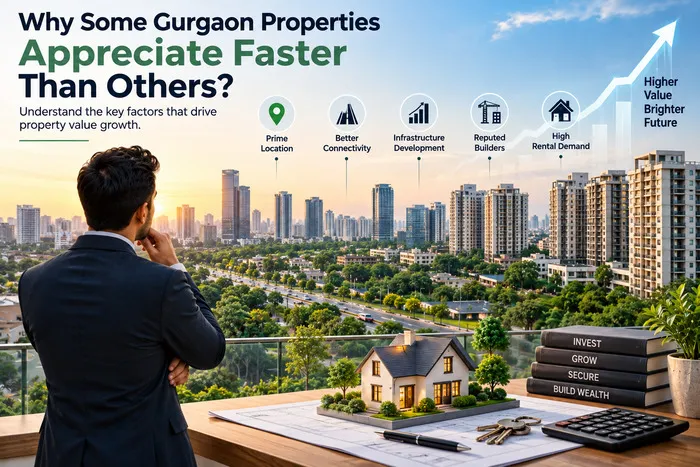
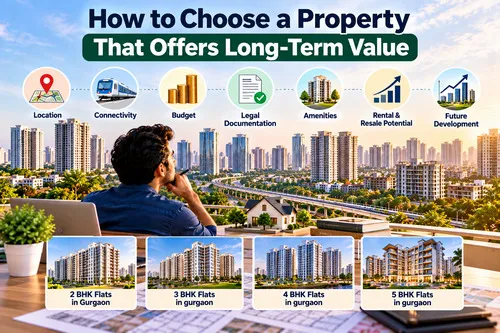
Choosing a property for long-term value requires more than comparing prices or selecting a project with attractive amenities. Buyers should consider location, connectivity, construction quality, legal documentation, builder reputation, rental demand, resale potential, and future development before making a decision. Ujjwal Properties helps buyers evaluate these important factors while exploring Flats in Gurgaon and other residential opportunities according to their budget, lifestyle, and long-term objectives.
Start With the Location
Location is one of the strongest factors influencing a property's long-term usefulness and potential value. A well-connected location can provide convenient access to workplaces, schools, hospitals, shopping centres, entertainment areas, highways, and public transportation.
When comparing properties, buyers should study both the current surroundings and the expected development of the locality. Established areas may offer better social infrastructure, while developing locations may provide opportunities linked to future infrastructure and commercial growth.
Evaluate Connectivity and Accessibility
Good connectivity can make a residential property more attractive to both homeowners and future buyers. Properties with convenient access to major roads, expressways, metro networks, business districts, and public transportation can benefit from broader demand.
Before purchasing, check actual travel times to important destinations rather than relying only on advertised distances. Traffic conditions, road quality, public transport availability, and planned infrastructure can all influence everyday convenience.
Understand Your Budget Clearly
Long-term value begins with financial suitability. Buyers should determine a realistic budget before visiting projects and should consider the complete cost of ownership rather than only the advertised property price.
Additional expenses may include registration charges, taxes, maintenance, parking, interiors, brokerage where applicable, and financing costs. Buyers using home loans should also calculate their expected EMI and ensure that it remains manageable alongside other financial commitments.
Choose the Right Property Configuration
The right configuration depends on family size, lifestyle, budget, future requirements, and intended use. A property that provides enough usable space today may also need to remain practical as family requirements change.
For first-time buyers, small families, or professionals, 2 BHK Flats in Gurgaon can offer a practical balance between living space and overall cost. Buyers should compare carpet area, room dimensions, ventilation, storage, parking, and layout rather than focusing only on the bedroom count.
Compare Larger Homes Carefully
Families requiring additional rooms may consider 3 BHK Flats in gurgaon for greater flexibility. Extra space can be useful for children, guests, work-from-home arrangements, or future family requirements. However, buyers should ensure that the additional area justifies the higher purchase and maintenance costs.
For buyers seeking more spacious homes, 4 BHK Flats in gurgaon can offer additional privacy and flexibility. Such properties should be evaluated based on location, layout efficiency, construction quality, amenities, maintenance costs, and future resale demand.
Premium buyers may also consider 5 BHK Flats in gurgaon when they require extensive living space, multiple bedrooms, guest accommodation, or dedicated areas for work and recreation. However, a larger property is not necessarily a better investment unless the location, pricing, demand, and long-term requirements support the purchase.
Compare Price With Actual Value
A property offering the lowest price is not always the best long-term choice. Buyers should compare similar properties in the same locality based on carpet area, construction age, floor level, amenities, parking, maintenance charges, connectivity, and surrounding infrastructure.
It is also useful to calculate the effective cost per usable area rather than relying only on the headline price. A slightly higher-priced property may offer stronger value if it provides better connectivity, construction quality, location advantages, or long-term demand.
Check the Builder's Reputation
The developer's track record can influence construction quality, project delivery, maintenance standards, and buyer confidence. Research the builder's completed projects and examine delivery history, construction standards, resident feedback, and maintenance performance.
However, buyers should not depend entirely on a builder's reputation. Each project should be evaluated independently for approvals, specifications, location, pricing, construction status, and actual features.
Verify Legal Documentation
Legal due diligence is essential before purchasing any property. Buyers should verify ownership, title documents, applicable approvals, project registration where relevant, development permissions, payment terms, and other important documentation.
For significant property purchases, professional legal advice can help buyers understand documents and identify potential concerns before making a financial commitment.
Consider Future Infrastructure
Long-term property value can be influenced by infrastructure and development around the project. New roads, transportation networks, commercial centres, educational institutions, healthcare facilities, and employment hubs can affect the attractiveness of a locality.
However, buyers should distinguish between confirmed developments and promotional claims. Proposed projects may experience delays or changes, so reliable information should be checked before including future infrastructure in an investment decision.
Examine Rental and Resale Potential
Even when purchasing a property for personal use, it is useful to consider its future rental and resale potential. Properties located near employment centres, educational institutions, transportation facilities, and established social infrastructure may attract a wider range of tenants and future buyers.
Investors should compare expected rental income with the purchase price, maintenance costs, financing expenses, taxes, and potential vacancy periods. Resale demand should also be assessed by studying comparable properties in the same area.
Look at Amenities From a Practical Perspective
Amenities can improve the living experience, but buyers should evaluate their actual usefulness. Security, parking, landscaped areas, fitness facilities, children's spaces, clubhouse facilities, and community areas can add value when they are properly maintained and relevant to residents.
Instead of choosing a project simply because it has a long amenities list, consider the quality, usability, maintenance costs, and accessibility of those facilities.
Consider the Current Market Carefully
Market timing can influence purchasing decisions, but it should not be the only consideration. Buyers can study pricing trends, inventory, demand, interest rates, infrastructure development, and the performance of comparable projects.
While researching market conditions, the earlier insight Is This the Right Time to Buy Property in Gurgaon? can help buyers think about affordability, location, connectivity, pricing, future development, and their own financial readiness before making a decision.
The most suitable time to buy can differ from one buyer to another. A financially prepared buyer with a clearly identified property may have different priorities from someone who is still building savings or comparing loan options.
Think About Long-Term Lifestyle Needs
A property should meet both current and foreseeable requirements. Buyers should think about family growth, work-from-home needs, accessibility, storage, parking, lifestyle preferences, and the possibility of needing additional space in the future.
A property that works well for your lifestyle can remain useful even if market conditions change. This is why long-term value should be assessed from both financial and practical perspectives.
Create a Property Evaluation Checklist
Before making a final decision, compare shortlisted properties using the same criteria:
-
Location and neighbourhood quality
-
Road and public transport connectivity
-
Total purchase and ownership cost
-
Carpet area and layout
-
Builder reputation
-
Construction quality
-
Legal documentation
-
Amenities and maintenance
-
Rental demand
-
Resale potential
-
Existing infrastructure
-
Future development
-
Financing requirements
-
Long-term lifestyle needs
A structured comparison helps reduce emotional decision-making and makes it easier to identify a property that provides a suitable combination of comfort, affordability, and potential long-term value.
Conclusion
Choosing a property for long-term value requires careful research rather than simply selecting the largest home or the lowest-priced project. Buyers should evaluate location, connectivity, budget, configuration, construction quality, legal documentation, amenities, rental demand, resale potential, and future development together.
A property that fits your financial capacity and long-term requirements can provide greater practical value over time. Ujjwal Properties can help you explore suitable residential opportunities and compare properties according to your needs and investment objectives. Contact Ujjwal Properties today for professional property guidance and assistance in making a well-informed decision.